What are Foundation Electives (FE)?
Foundation Electives (FE) are mandatory courses that every B.Tech student must complete during the first year.
There are two Foundation Electives:
- FE-1: NSS / SWRAC / NCC
- FE-2: Club-based elective
FE classes are generally held on Fridays from 3:30 PM to 5:30 PM.
Unlike regular academic subjects, FE is designed to help students participate in extracurricular activities, interact with seniors, and explore interests outside the classroom.
FE is only a 1-credit course, so don't stress too much about it. Most students consider it one of the more relaxed and enjoyable parts of first year.
Which branches have FE in which semester?
Group 1
These branches complete FE-1 in Semester 1 and FE-2 later:
- Civil Engineering
- Information Technology (IT)
- Artificial Intelligence (AI)
- Biotechnology (BT)
- Textile Technology (TT)
- Electrical Engineering (EE)
- Instrumentation & Control (ICE)
Group 2
These branches complete FE-2 in Semester 1 and FE-1 later:
- Chemical Engineering
- VLSI
- Electronics & Communication Engineering (ECE)
- Computer Science Engineering (CSE)
- Data Science Engineering (DSE)
- Mechanical Engineering
How do I register for FE?
Foundation Electives are selected through ERP.
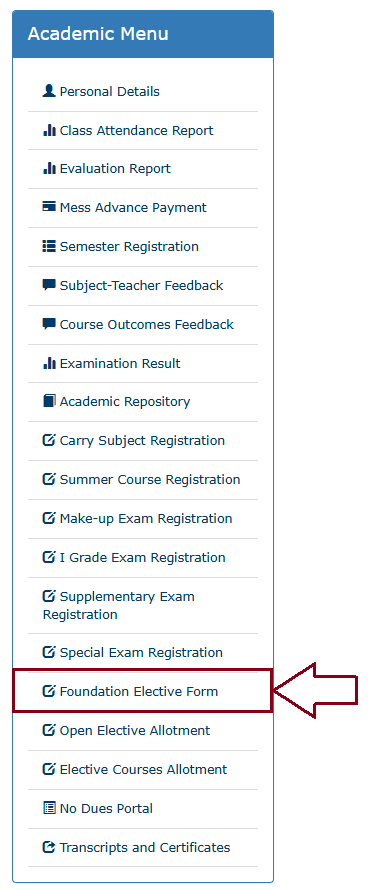
Navigate to Academic Menu → Foundation Elective Form during the registration period and submit your preferences.
FE-1 Options (NSS, SWRAC & NCC)
| Code | Elective |
|---|---|
| PDFE0101 | NCC |
| PDFE0102 | NSS |
| PDFE0104 | SWRAC (Social Works and Rural Activity Club) |
NSS
NSS is generally the most popular choice among students.
Why students prefer it:
- Usually considered easier to score well in.
- Interactive and participation-based.
- Fun group activities instead of traditional classroom teaching.
- Fair grading according to most seniors.
Activities may include:
- Group discussions
- Presentations
- Social awareness activities
- "Shark Tank" where groups pitch ideas for products made from waste materials
Most NSS sessions are conducted in an interactive manner rather than through lectures.
SWRAC
SWRAC (Social Works and Rural Activity Club) focuses more on:
- Social interaction
- Community engagement
- Rural awareness activities
- Participation-based events
Students who choose SWRAC generally find it similar in workload to NSS, with a greater emphasis on interaction and social activities.
NCC
NCC is more structured and disciplined compared to NSS and SWRAC.
It includes:
- Regular activities and drills
- Additional commitments
- Examinations and assessments
Students interested in defence services, leadership training, or NCC certificates often prefer NCC.
You cannot take NSS and NCC together.
FE-2 Club Options
Most FE clubs are coordinated by faculty members, but the actual activities are usually conducted by senior students from the club.
This is one of the easiest ways for freshers to interact with 2nd and 3rd year students in a relaxed environment.
| Code | Club |
|---|---|
| PDFE0111 | Music Club |
| PDFE0112 | Dance Club |
| PDFE0113 | Dramatics Club |
| PDFE0114 | Literary & Debating Club (LADC) |
| PDFE0115 | Yoga & Meditation Club |
| PDFE0116 | Photography & Movie Club |
| PDFE0117 | Fine Art Society |
| PDFE0118 | Website Developing & Management Club |
| PDFE0119 | Sports (NSO) |
| PDFE0123 | Chetna Club |
What happens in these clubs?
Photography & Movie Club
One of the most popular FE choices.
Activities are usually creative and relaxed.
Examples include:
- Weekly photography assignments
- Photo submissions based on a theme
- Discussions about photographs and movies
- Showcasing student work
Many students choose it because it is fun and requires very little pressure.
Literary & Debating Club (LADC)
You do not need prior debating experience.
Activities may include:
- Group discussions
- Debates
- Public speaking
- Team-based activities
Most sessions are conducted by club seniors, making them interactive rather than lecture-based.
Sports (NSO)
A popular choice for students who enjoy being active.
Activities generally include:
- Running
- Fitness exercises
- Sports activities
- Games on the ground
Students often choose NSO because it is relaxed, fun, and allows interaction with students from different branches.
Dance Club
Dance sessions are usually conducted by senior club members.
Activities include:
- Learning dance routines
- Group practice
- Event performances
A good choice if you enjoy dancing and want a low-stress FE.
Music Club
Singing and music-related activities with fellow students who share similar interests.
Dramatics Club
Activities include:
- Acting
- Skits
- Stage performances
- Theatre exercises
Helpful for building confidence and stage presence.
Fine Art Society
Suitable for students interested in:
- Sketching
- Drawing
- Painting
- Creative artwork
Yoga & Meditation Club
Focused on:
- Yoga sessions
- Meditation
- Wellness activities
Chetna Club
Focuses on awareness programs, discussions, and personality development activities.
Website Developing & Management Club
This is the one FE that many freshers misunderstand.
A common thought is:
"I already know web development, so this will be an easy FE."
That is not necessarily true.
Unlike many other clubs, this FE is generally more classroom-oriented and professor-led. There may be assignments, technical activities, and structured sessions. This FE is also considered to be the toughest to score in.
Choose it if you're genuinely interested in the club, not simply because you already know web development.
Which FE do students usually prefer?
FE-1
Most students generally prefer:
- NSS
- SWRAC
- NCC
NSS is usually the most popular because of its interactive activities and student-friendly grading.
FE-2
Commonly chosen clubs include:
- Photography & Movie Club
- Sports (NSO)
- Dance Club
- Literary & Debating Club (LADC)
That said, most students end up enjoying whichever club they choose.